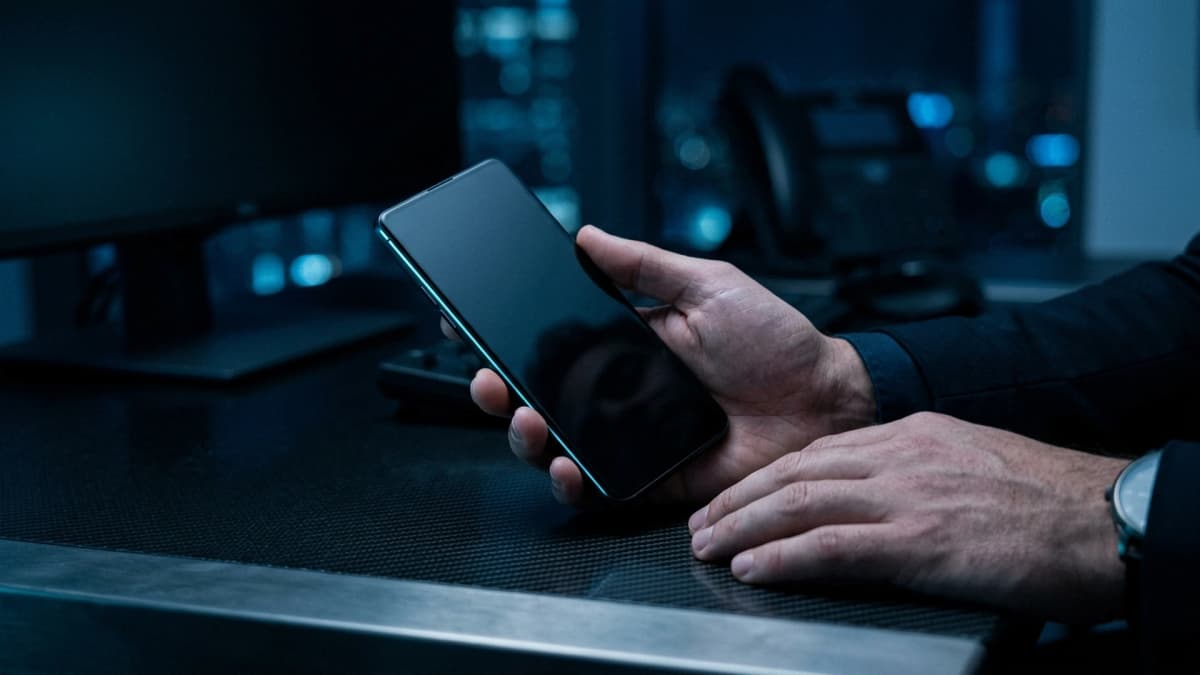

How a secure phone protects against data theft
Critical data theft is no longer confined to remote network breaches or cloud account compromises; it increasingly takes place directly on the mobile terminal through physical cable extractions, zero-day spyware, juice-jacking stations, and forced handset unlocks. Mainstream commercial smartphones sacrifice operational isolation in favor of aggressive telemetry collection and cloud syncing. A hardened secure phone restructures the device from silicon to operating system, ensuring complete data sovereignty under adversarial conditions.
Critical vectors of mobile data theft
Commercial mobile architectures expose enterprise and personal data to multiple structural vulnerabilities targeted by sophisticated actors:
- Hardware forensic extraction over cable: Specialized law-enforcement and corporate espionage suites (such as Cellebrite or GrayKey) interface directly with the USB controller to bypass standard locks and dump physical memory images.
- Silent covert spyware and infostealers: Malicious binaries abuse mobile accessibility frameworks to log keystrokes, siphon authorization tokens, and capture two-factor credentials in real time.
- Juice-jacking at public charging points: Unprotected USB ports in transit terminals and hotels can quietly establish serial protocol links to extract user partitions during routine charging.
- Telemetry leakage and unencrypted cloud mirrors: Default mobile operating systems continuously sync location records, contact books, and app caches to third-party servers subject to subpoenas or corporate data breaches.
- Snatch-theft and physical coercion: When an unlocked device is seized on the street or the owner is forced to authenticate, commercial systems leave all local files and communications fully exposed.
Architectural defenses of a hardened phone
To eliminate these vulnerabilities, an encrypted security smartphone such as Zi0n employs deep defense-in-depth protocols combining dedicated cryptography silicon, OS-level hardening, and proactive physical safeguards.
1. Hardware-backed storage encryption and RAM purging
Every file partition utilizes File-Based Encryption (FBE) bound to hardware security modules (StrongBox/SE). Whenever the device locks or enters standby, cryptographic decryption keys are purged from system RAM. Without immediate biometric or master passphrase re-authentication, the device storage remains an impenetrable block of pseudorandom entropy.
2. Physical USB data port isolation and Cable Wipe
The physical connection port is a primary attack surface during unauthorized inspections. Zi0n natively blocks USB data signaling whenever the screen is locked, preventing automatic ADB negotiations or diagnostic handshakes. Furthermore, the Cable Wipe mechanism detects rogue investigative cables or unauthorized serial attachments, instantly triggering defensive lockdown or rapid memory sanitization.
3. Strict application sandboxing and sensor hardware controls
Unlike conventional platforms, a hardened operating system restricts each application inside an isolated sandbox with zero shared storage permissions and randomized hardware identifiers. Physical and software kill-switches sever power to microphones and camera modules. Additionally, the window compositor enforces system-wide FLAG_SECURE rules, preventing unauthorized screen capture, video mirroring, or background scraping.
4. Decoy profiles and Duress PIN against extortion
In hostage or physical coercion situations where unlocking the handset is unavoidable, the owner can enter a specialized Duress PIN. The system launches a completely functional decoy workspace containing innocuous everyday apps and benign correspondence. True cryptographic credentials, cryptocurrency wallets, and private vaults remain completely hidden within encrypted secondary partitions.
5. Zero telemetry and decentralized network routing
The operating environment operates stripped of proprietary background trackers and mandatory Google dependencies. All network communications route through a decentralized VPN infrastructure with dynamic IP address rotation, preventing cellular carrier profiling and intercept attacks on untrusted Wi-Fi hotspots.
Practical steps to safeguard confidential data on the move
To maximize your operational security while traveling or operating in hostile environments:
- Restrict USB ports strictly to power charging: Disable all data transfer protocols in settings and use data-blocking adapters when connecting to unfamiliar power sources.
- Configure automatic wipe timers: Set an inactivity threshold where the device triggers an automated storage key purge if left unlocked or without connectivity for a specified duration.
- Eliminate unencrypted cloud backups: Store sensitive recovery phrases, private keys, and critical business documents exclusively inside encrypted local enclaves.
- Isolate operational profiles: Keep high-risk communication tools separate from primary data storage environments through independent user spaces.
How does Zi0n protect you against data theft?
Zi0n provides an uncompromising, military-grade response to mobile espionage, corporate data theft, and physical extraction. By combining a de-Googled hardened operating system, tamper-resistant cryptographic hardware, proactive Cable Wipe defenses, and anti-coercion decoys, Zi0n guarantees that your data stays exclusively in your hands.
To explore technical specifications and secure your own hardware terminal, visit the official Zi0n platform.
Frequently asked questions
How does a secure phone block forensic extraction tools?
By maintaining USB data lines in a disabled state while locked and employing active Cable Wipe detection, the phone rejects forensic handshakes initiated by tools like Cellebrite, preventing disk acquisition.
How does encryption on a secure phone differ from standard commercial devices?
Standard phones often keep decryption keys active in RAM while sleeping to sustain push notifications. A secure phone evicts these keys from volatile memory upon locking, relying on tamper-resistant hardware chips.
What happens when the Duress PIN is entered?
The Duress PIN launches an authentic-looking decoy operating profile containing plausible dummy data. The attacker has no algorithmic way to discover the hidden, high-security primary storage volume.
Can data be recovered after an emergency wipe command?
No. An emergency wipe immediately obliterates the cryptographic master keys stored inside the hardware security chip. Without these keys, the underlying data cannot be reconstructed by any computational method.
Ensure total sovereignty over your confidential assets and eliminate mobile data theft with Zi0n.