Why screen capture blocking will be an expected standard by 2027
The smartphone display is the ultimate focal point of modern personal computing. On that glass panel, Web3 wallet seed phrases, high-value exchange credentials, and confidential executive discussions are transformed into visible light. While modern storage volumes rely on advanced encryption standards, the display framebuffers remain a high-value target for sophisticated mobile espionage operations.
Mobile security researchers point to a fundamental shift in adversary tactics. Looking toward 2027, mobile platforms that permit unconstrained screenshot creation or passive interface recording will be deemed obsolete for professional and enterprise use. System-wide, hardware-enforced visual shielding will transition from a specialized privacy feature into an essential baseline requirement.
The rise of visual spyware and automated screen scraping
On conventional commercial operating systems, application layers maintain indirect yet continuous access to graphical surfaces. This structural permissiveness enables banking trojans and info-stealers to harvest credentials without tripping traditional endpoint detection:
- Automated optical character recognition scraping : background spyware takes periodic silent snapshots, running on-device OCR routines to extract mnemonic keys and authentication codes without touching local storage.
- Abuse of accessibility frameworks : malicious utilities masquerading as assistive tools continuously parse the window view hierarchy, exfiltrating plaintext passwords as they appear.
- Multitasking thumbnail exposure : system app switchers routinely generate and store unencrypted image previews of recently viewed windows in local flash cache.
- Unauthorized hardware video mirroring : weaponized charging docks or modified physical adapters attempt to mirror graphical display streams over physical ports without explicit user awareness.
Because these techniques target information at the exact moment it is decrypted and presented for human interaction, legacy disk-level protections are entirely bypassed.
Even the most mathematically robust encryption engine fails to protect an asset if the underlying operating system permits untrusted background processes to capture display pixels.
Structural flaws in standard mobile display architecture
Across mainstream Android distributions, screen confidentiality depends almost entirely on the developer-controlled FLAG_SECURE window parameter. This architecture exposes substantial vulnerabilities when challenged by competent threat actors.
Fragile reliance on opt-in application policies
FLAG_SECURE requires proactive implementation across every single screen and modal dialog by third-party developers. Numerous crypto platforms and communication tools neglect to set this flag on secondary screens. Furthermore, sophisticated malware gaining elevated local privileges or exploiting kernel vulnerabilities can hook into the SurfaceFlinger window compositor to silently strip these flags in memory.
Persistent frame residue in volatile video memory
When an application is minimized or hidden on a standard device, graphical framebuffers in volatile video RAM are rarely scrubbed immediately. A rapid forensic memory dump executed during this exposure window allows investigators or attackers to reconstruct the displayed visual state with pixel-perfect clarity.
Practical measures against visual data exfiltration
To minimize graphic exposure during critical mobile workflows, follow these operational security practices:
- Never capture or store credentials as images : keep private keys and master recovery phrases exclusively on physical offline mediums or air-gapped hardware.
- Audit and restrict accessibility services : regularly inspect granted system permissions, immediately revoking screen-overlay and accessibility access for non-critical tools.
- Transition to hardware-enforced security architectures : deploy hardened mobile environments that enforce screen confidentiality globally across all active processes.
How Zi0n delivers the 2027 security standard today with WipSCREEN
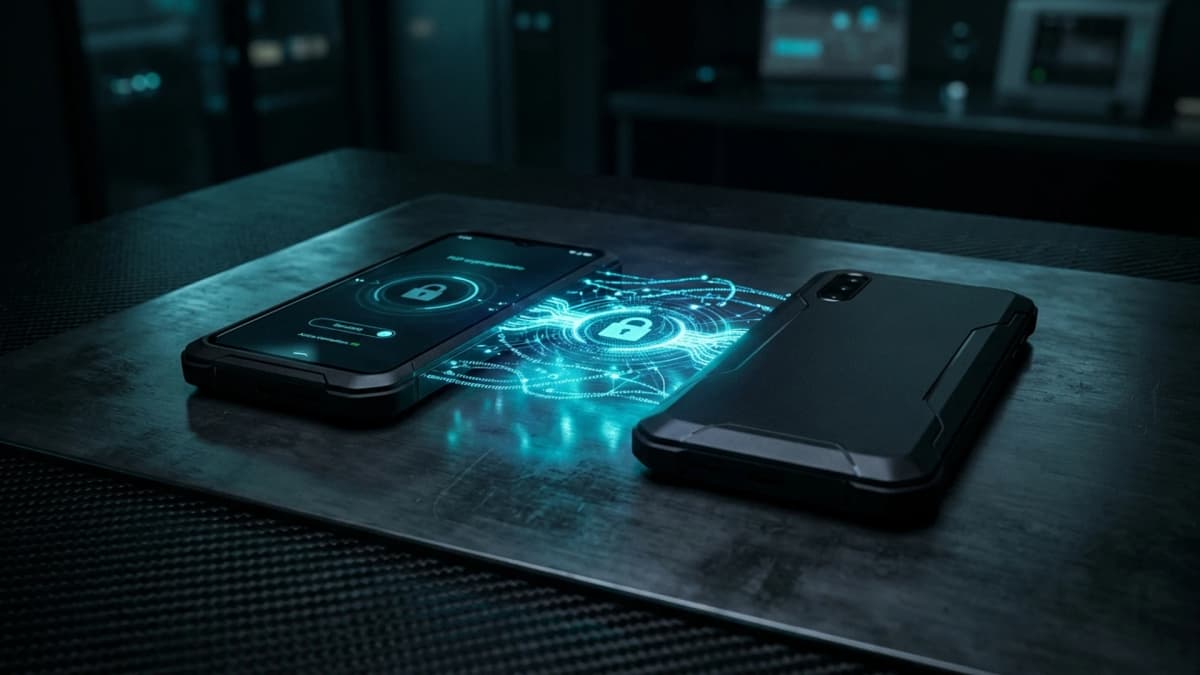
Zi0n treats display confidentiality as a non-negotiable hardware and software discipline. Through its proprietary WipSCREEN engine, the platform enforces display isolation directly at the Hardware Abstraction Layer (HAL) and deep within the native SurfaceFlinger graphic compositor.
Whenever a screenshot is triggered via physical button chords, debug commands, or background scraping routines, WipSCREEN returns a completely blank, blackened frame buffer. Concurrently, graphic memory is instantly purged the moment the device locks or an application loses active window focus. By delivering hardware-backed visual defense out of the box, Zi0n establishes the security posture that industry regulations will mandate by 2027. Explore the engineering behind Zi0n at https://zi0n.io.
Frequently asked questions
Why is application-level screenshot protection no longer sufficient?
Application-level protection relies on individual software developers and can be dismantled by privilege escalation. Truly resilient defenses must be enforced globally and immutably by the underlying operating system.
How does WipSCREEN differ from standard Android security toggles?
WipSCREEN is rooted in the hardware abstraction layer and core graphic compositor. It prevents external display cloning, destroys recent app snapshot caches, and feeds blackened data streams to surveillance tools.
Does WipSCREEN impact mobile device performance or battery life?
No. Because visual stream filtration is integrated directly into the native display hardware pipeline, operations occur at wire speed without processor overhead or power penalties.
Can physical extraction cables bypass this visual protection?
No. Operating in conjunction with Zi0n's USB port isolation and Cable Wipe protocols, any attempt to tap raw video or frame output over physical connectors is terminated instantly.