
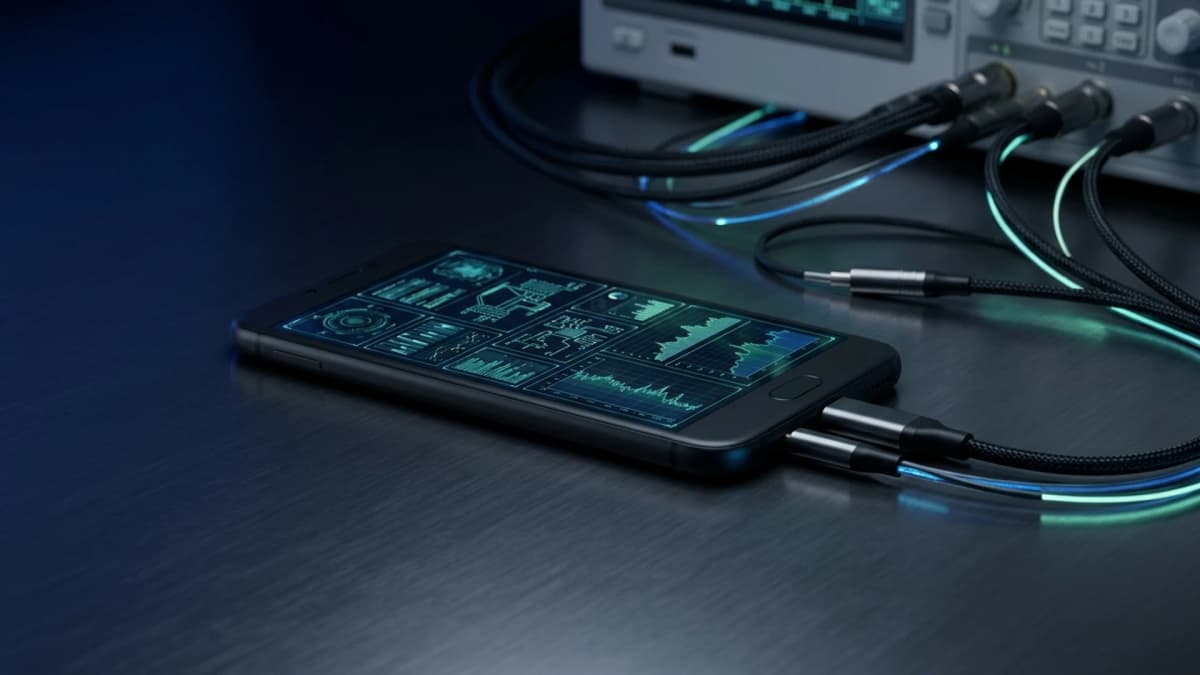
How to evaluate the real security level of a phone
Believing a smartphone is protected merely by a PIN or biometric scanner is a misconception. Against forensic extraction stations and advanced spyware targeting volatile memory, mainstream consumer defenses collapse quickly.
To measure a device's genuine defense posture, you must audit its hardware isolation, absence of telemetry, and resilience against physical intrusion.
The false sense of protection in consumer smartphones
Standard mobile operating systems are engineered to collect user data continuously. Background processes transmit persistent hardware identifiers (IMEI, MAC addresses) to corporate servers, keeping access vectors open.
When connected to forensic hardware, standard USB controllers readily surrender storage partitions without requiring screen unlocking. Simultaneously, silent spyware operates in the background, capturing private keys and clipboard contents.
A phone's true security relies not on the length of its password, but on the system's architectural inability to yield data to an untrusted interface.
Technical pillars for auditing mobile defense posture
A comprehensive evaluation requires analyzing three decisive hardware and software boundaries.
Hardware isolation and verified boot integrity
A secure device validates every software layer upon startup through immutable cryptographic signatures stored in an isolated security enclave. Any unauthorized firmware or kernel modification immediately prevents access to encrypted partitions, stopping persistent rootkits.
Physical resistance to USB cable extraction
The charging port represents the primary physical attack surface. On conventional devices, connecting a cable instantly establishes data links. A hardened architecture severs these communication channels at the hardware or kernel level while the screen remains locked.
Complete de-googling and strict memory compartmentalization
Eliminating tracking services prevents behavioral profiling. Every application must execute within a strict sandbox container without cross-process permissions, while volatile RAM encryption keys are purged immediately upon locking.
Practical steps to audit your current device
Before handling sensitive communications or high-value assets, perform these immediate checks:
- Audit developer interfaces and debugging: permanently disable ADB protocol and restrict automated USB file transfers.
- Review accessibility and administration privileges: revoke elevated privileges granted to third-party applications.
- Inspect network traffic and DNS queries: monitor background connections to uncover hidden analytical telemetry.
- Disable unencrypted cloud backups: turn off automated synchronization of credentials to shared public clouds.
How Zi0n redefines advanced mobile security
Zi0n transforms mobile security by coordinating dedicated hardware protections and hardened software. Its privacy-first operating system eliminates commercial telemetry, delivering verified resistance against targeted attacks.
The proprietary Cable Wipe protocol continuously monitors the USB port, instantly purging memory encryption keys upon detecting unauthorized forensic hardware. To counter physical duress, the Duress PIN opens a plausible decoy session without compromising your true data stores. Furthermore, traffic routes through a decentralized network with dynamic IP rotation to eliminate surveillance. Learn more at zi0n.io.
Frequently asked questions about mobile security
Is a complex PIN sufficient to safeguard my phone?
No, a complex passcode cannot prevent direct hardware memory extraction via USB or kernel-level memory dumps.
Why are commercial smartphones vulnerable by design?
Their business model depends on continuous telemetry collection, expanding background connections and multiplying attack vectors.
How does Cable Wipe protect sensitive data?
Upon detecting an unauthorized physical cable connection, it wipes cryptographic keys from RAM before forensic tools can extract data.
Do commercial mobile antivirus apps help?
No, antivirus apps run in user space and lack authority to inspect or mitigate low-level firmware exploits.
Safeguard your communications and digital sovereignty today with the Zi0n ecosystem.