
How to know if your smartphone is really secure
Assuming that a standard consumer smartphone is protected simply because it requires a six-digit PIN code and biometric fingerprint authentication is a dangerous misconception. Across modern threat landscapes—ranging from stealthy mobile banking trojans and zero-click spyware to dedicated hardware forensic extraction workstations—the real security of any handheld device is demonstrated by its structural resilience against targeted compromise.
The vulnerability gap of commercial smartphones under real attacks
The vast majority of mass-market handsets are designed for entertainment, convenience, and advertising monetization rather than hardened defensive computing. When determined adversaries, corporate competitors, or intrusive intelligence tools focus on your cryptocurrency assets or confidential records, mainstream safeguards fail systematically:
- Factory telemetry and proprietary backdoors: commercial Android distributions and iOS persistently gather non-resettable hardware identifiers (IMEI, IMSI, baseband serial numbers) and granular geolocation coordinates that feed remote profiling databases without user consent.
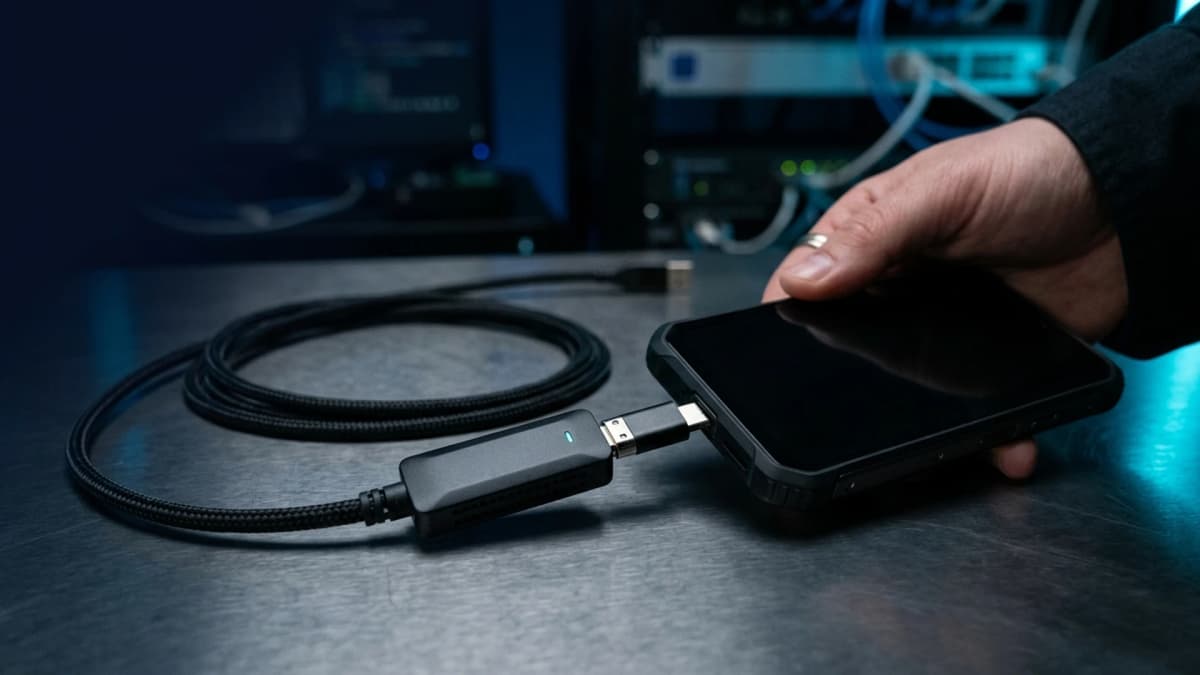
- Physical cable extraction without screen unlock: forensic workstations such as Cellebrite UFED or GrayKey exploit unpatched USB microcode vulnerabilities to force devices into emergency download mode (EDL) or test modes, executing memory dumps directly from physical storage.
- Silent background spyware and screen-capturing implants: sophisticated malware can operate invisibly without causing thermal throttling or conspicuous battery drains, intercepting cryptocurrency seed phrases, recording keystrokes, and activating microphones covertly.
- Cellular carrier vulnerabilities and SS7 tracking: legacy physical SIM cards leave accounts vulnerable to unauthorized SIM swapping attacks and intercepting two-factor authentication SMS codes over obsolete telecommunications signaling protocols.
5 technical indicators to verify whether your phone is genuinely secure
To evaluate whether your handset provides legitimate defense or merely the cosmetic appearance of security, examine these five decisive technical benchmarks.
1. Absolute hardware control over camera, microphone, and sensors
On consumer devices, application permissions are handled by software abstractions that privileged kernel-level exploits can easily bypass. A truly secure mobile device must provide verifiable kernel-level isolation or hardware cutoff controls that physically prevent background audio recording and unauthorized camera activation.
2. Physical USB port defense against forensic cable extraction
Observe how your device behaves when connected to an unfamiliar workstation. If the USB interface initiates automated handshake protocols (such as MTP or ADB) prior to full user authentication, it exposes a critical attack surface. A hardened operating environment cuts power to the USB-C data pins (D+/D-) whenever the screen is locked, neutralizing forensic probes before negotiations begin.
3. Rigorous sandboxing and complete elimination of Google tracking
The presence of Google Play Services and embedded advertising telemetry constitutes an ongoing privacy compromise. A hardened device must run on a fully de-Googled operating system where each app is isolated in a strict container, preventing any cross-process access to shared memory, device serials, or the system clipboard.
4. Coercion resistance and dedicated Duress PIN mechanisms
What happens if you are physically forced to unlock your device by an extortionist or an unlawful interrogation? Complying reveals all your private keys and records; refusing invites physical harm. A hardened smartphone resolves this through a Duress PIN that either logs into an innocuous decoy profile or quietly executes an irreversible wipe of encrypted storage partitions.
5. Network anonymity and dynamic decentralized IP routing
Standard commercial VPNs merely funnel all traffic through centralized servers that can be monitored, logged, or subpoenaed. Next-generation secure mobile architecture relies on decentralized peer routing with continuous IP address rotation, combined with anonymous international eSIM profiles that decouple your device from your real-world identity.
Actionable operational audit protocol for your device
If you currently rely on an off-the-shelf smartphone to manage private keys, business discussions, or sensitive credentials, execute this practical audit immediately:
- Verify developer options and USB debugging status: ensure that ADB and developer tools remain permanently disabled to block unauthorized physical bridge attacks.
- Audit Android accessibility permissions: mobile banking trojans exploit accessibility services to read displayed text and authorize fraudulent transactions automatically. Immediately revoke accessibility permissions for all non-essential applications.
- Review device administrator privileges: no consumer messaging, browsing, or gaming application should ever possess device administrator rights over your operating system.
- Isolate cryptographic seed phrases on hardened hardware: never store private keys, recovery phrases, or wallet backups on devices connected to commercial cloud backup services.
- Disable background Wi-Fi and Bluetooth scanning: continuous wireless scanning broadcasts unique probe requests that allow observers to track your physical movements and deploy rogue access points.
How Zi0n delivers uncompromising mobile protection
Transforming an off-the-shelf mobile device into an impenetrable fortress requires deep integration across hardware, microcode, and the operating system. Zi0n establishes a dedicated defense architecture built specifically for high-exposure environments:
- Cable Wipe defense: if the device detects unauthorized forensic interrogation or malicious hardware probes on the USB connector, it instantaneously vaporizes cryptographic master keys stored in the secure hardware module.
- De-Googled hardened operating system: zero corporate telemetry, no embedded advertising trackers, and total cryptographic isolation for sensitive communication channels.
- Decentralized routing and private eSIM: anonymous multi-hop network traffic with continuous IP rotation to eliminate carrier tracking and ISP eavesdropping.
- Duress PIN and hardware panic wipe: immediate operational protection against physical duress through customizable decoy profiles and covert emergency wipe triggers.
Explore the complete capabilities of the Zi0n platform and harden your mobile defenses today at https://zi0n.io.
Frequently asked questions about mobile security
Are monthly Android security updates enough to keep my phone safe?
No. While monthly security patches address known software vulnerabilities, they do not remediate persistent operating system telemetry, forensic cable extraction vulnerabilities at the microcode level, or physical duress scenarios.
Can a mobile antivirus app stop zero-click spyware?
Antivirus apps operate within standard Android user-space constraints. They lack the system privileges required to inspect low-level firmware components or detect zero-day exploits operating beneath the operating system.
What are the primary symptoms of a compromised smartphone?
Unusual data traffic during idle periods, sudden battery consumption without active usage, unexplained background overheating, and unexpected permission prompts often indicate covert malware activity.
Why is a hardened Zi0n device superior to standard phones running security apps?
Security apps remain subordinate to the underlying commercial operating system and its vulnerabilities. Zi0n controls the fundamental layers of the device—from kernel access and port controls to cryptographic hardware triggers—providing autonomous protection that software apps cannot replicate.
Take control of your digital sovereignty and protect your assets at https://zi0n.io.