
Why mobile security is so important
Smartphones are no longer just portable communication tools for calls and messages. Today, they concentrate virtually our entire digital footprint: financial accounts, cryptocurrency wallets, two-factor authentication (2FA) seeds, confidential corporate conversations, and personal biometric data.
This unprecedented centralization makes mobile hardware the primary target for organized cybercriminals, private surveillance contractors, and forensic extraction units.
The smartphone as a single point of digital failure
When a desktop computer is breached, the fallout is usually contained within a specific corporate boundary. In contrast, compromising a smartphone immediately exposes every personal, financial, and operational aspect of the owner's life.
Most modern authentication protocols and credential reset mechanisms rely exclusively on mobile devices. If an unauthorized entity seizes control of the mobile operating system or intercepts cellular traffic, they can effortlessly bypass the security controls protecting email accounts, password vaults, and crypto exchanges.
Modern attack vectors targeting mobile devices
Contemporary intrusions rarely depend on careless user behavior alone. Attack vectors have evolved to silently circumvent conventional defenses without requiring suspicious user actions.
Stealth spyware and resident trojans
Advanced spyware operates completely undetected in memory. Exploiting excessive background permissions or zero-day vulnerabilities, these implants monitor clipboard data, log keystrokes, and capture screen content during sensitive financial or wallet transactions.
Network interception and untrusted connections
Open wireless networks, rogue access points, and IMSI-catchers intercept mobile metadata, triangulate precise real-world locations, and provide entry points for malicious packet injection attacks.
Physical forensic extraction through hardware interfaces
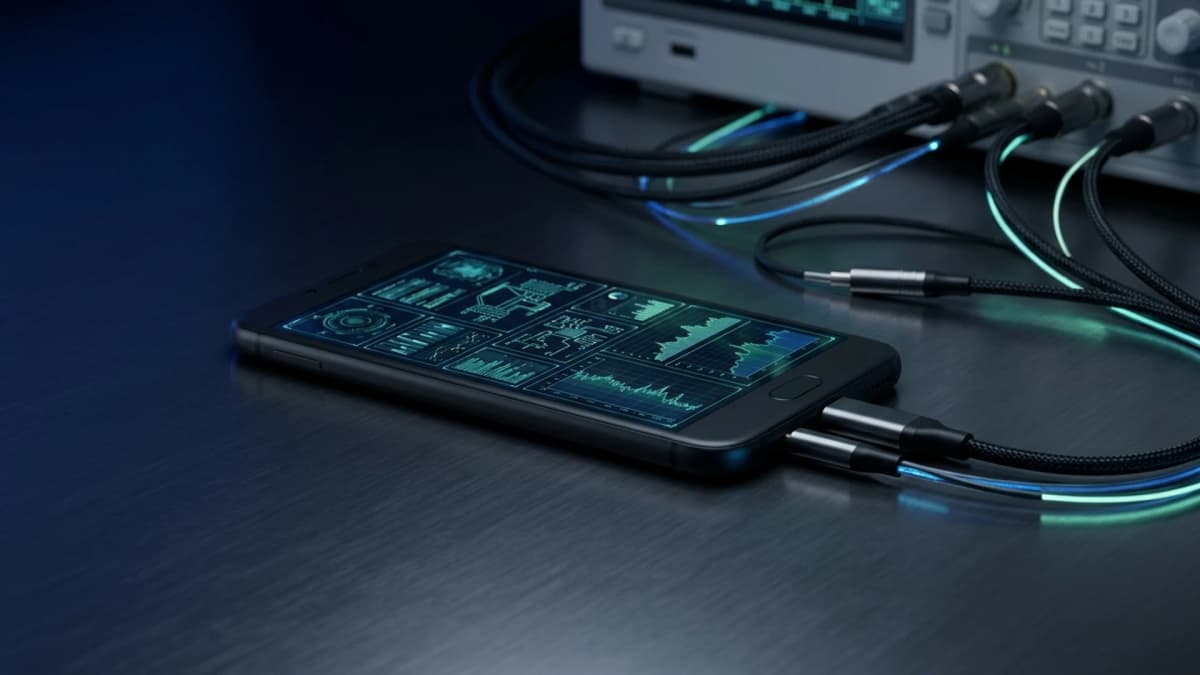
During targeted thefts, border checks, or sudden inspections, adversaries deploy specialized forensic hardware platforms like Cellebrite UFED or GrayKey. By connecting directly to the locked USB interface, these machines exploit low-level firmware flaws to extract raw memory partitions without requiring screen PIN unlock.
Mobile security cannot be measured by the number of protective apps installed, but by the physical and architectural inability of the hardware to surrender data to unauthorized ports.
Fundamental strategies for mobile defense
To significantly minimize your exposure across these diverse threat vectors, strict technological discipline is essential:
- Strict process and application isolation : execute crypto wallets and banking tools within fully segregated user profiles to prevent cross-app memory leaks.
- Deactivation of idle wireless channels : disable Bluetooth, public Wi-Fi, and location radios whenever not actively needed to prevent wireless tracking.
- Vigilance over physical ports : never plug your device into public charging kiosks or unverified cables that might carry active data lines.
- Routine data hygiene : regularly wipe call logs, unencrypted cached files, and temporary credentials stored in device storage.
How Zi0n elevates mobile security architecture
Mainstream commercial smartphones are loaded with advertising trackers and expose physical hardware buses to extraction tools. Addressing these structural flaws, Zi0n delivers a hardened, defense-in-depth architecture.
Built on an operating system stripped of commercial telemetry and intrusive services, Zi0n isolates each application inside an impervious sandbox. No process can inspect or interfere with neighboring memory spaces.
At the physical layer, Zi0n's Cable Wipe (Wipi) technology monitors USB data pins in real time: if an unauthorized physical connection is attempted while locked, the Secure Element instantly purges its cryptographic master keys, rendering flash storage undecipherable. Furthermore, the Duress PIN feature unlocks a functional decoy profile under physical coercion. Discover the complete capabilities on zi0n.io.
Frequently asked questions
Why are standard lock screens and biometrics no longer sufficient?
Biometric sensors and screen passcodes only guard the graphical display. They provide zero protection against direct USB hardware extraction tools or persistent memory malware.
Can an off-the-shelf mobile antivirus solve these threats?
No. Antivirus apps run within standard user space with restricted permissions. They cannot audit modem baseband microcode or stop hardware-level cable extractions.
Why is hardware port defense vital during physical inspection?
Network encryption is useless if an adversary gains physical custody of your phone and connects a specialized cable. Port defense ensures the device severs data lines before data extraction begins.
Does operating an ultra-secure smartphone hinder daily usability?
No. Zi0n hardening embeds robust defensive protocols directly into the operating system, ensuring a smooth, fast, and seamless daily user experience.